Genny's DNA and philosophy
Genny develops personal mobility solutions starting from the needs of people with disabilities.
This experience guides the company's research and design. [R1; R2]
1. Why we exist
Moving is not just about getting from one place to another. It means choosing, meeting people, exploring, working, travelling, taking part. Movement is a concrete dimension of personal freedom.
Genny exists to question the conventions of assisted mobility and to imagine new experiences, through technology, design and engineering.
2. Our vision
We want to contribute to a new culture of personal mobility: defined less by the assistive device and more by the experience of the person who uses it. We do not regard innovation as a simple incremental improvement of familiar forms. When necessary, we rethink the problem from the ground up.
Our ambition may extend beyond today's products; the intended uses and the characteristics of each device remain those officially approved.
3. Our mission
To design mobility solutions that combine autonomy, control, safety, quality and a design capable of expressing personality. To translate technological complexity into an experience that is simple, understandable, concrete and enjoyable, within the limits of the product's capabilities and of individual needs.
3.1. From AW and PW to APW: the designation coined by Paolo Badano
AW - Active Wheelchair. This is the active manual wheelchair: the person produces the movement by pushing the handrims of the wheels with their hands. [R2]
PW - Power Wheelchair. This is the electric wheelchair: the motors provide propulsion and the person steers through dedicated controls, for example a joystick. [R2]
Genny combines electric propulsion with the active participation of the body. The motors produce the force needed for movement; the movements of the person's torso and weight command acceleration and stopping, without requiring manual pushing on the wheels. [R2]
Paolo Badano coined the term APW, Active Power Wheelchair, to give a name to this combination. In the designation, Active refers to the active role of the body in controlling movement; Power indicates electric propulsion. According to his account, the term originated during the development of Genny and the work to describe it and frame it in the medical field. Badano explicitly claims to have created it in the interview published by Oggi on 28 October 2024. [R9]
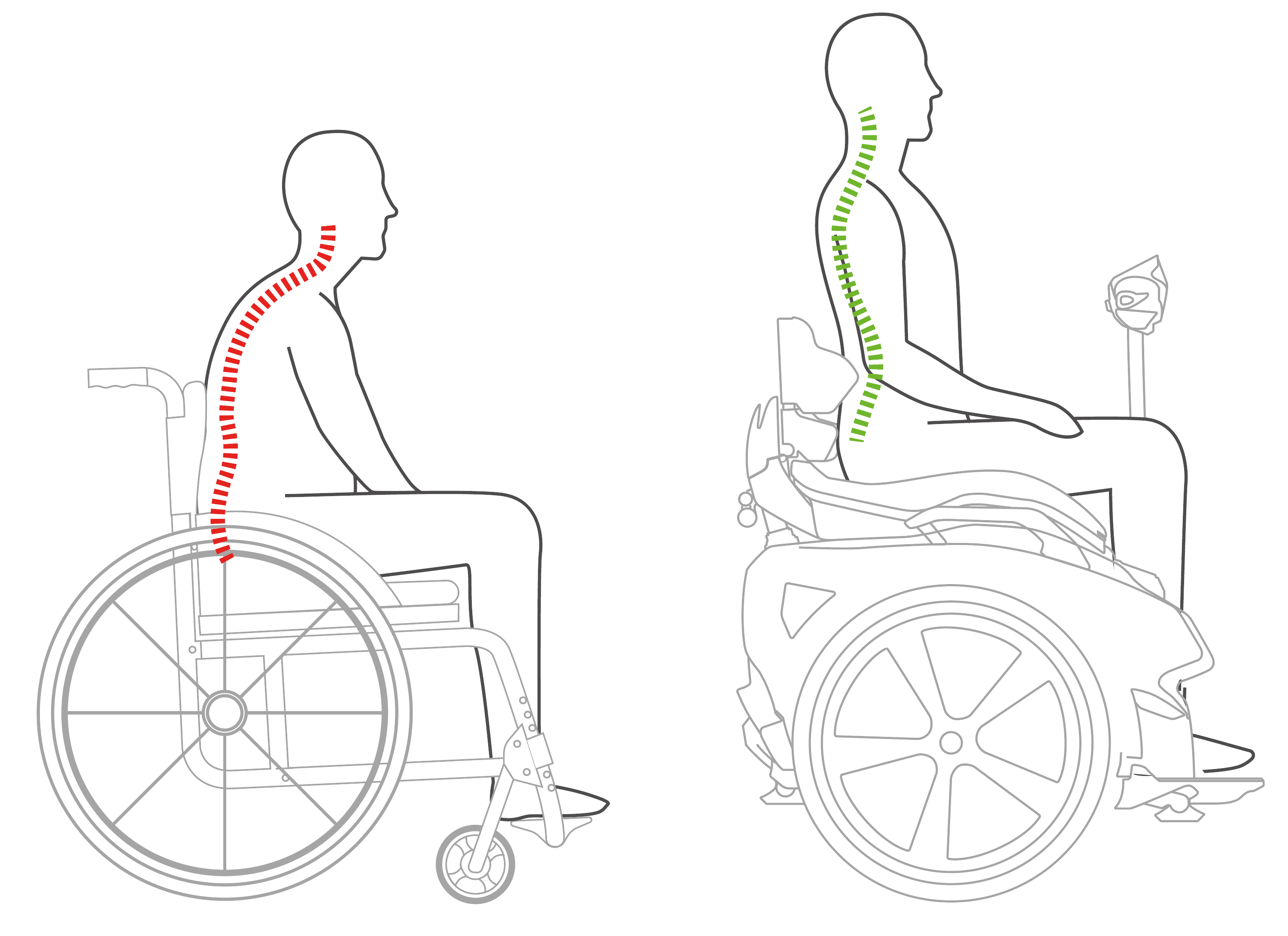
Authorship of the designation is distinct from the co-authorship of the contribution “Multi-disciplinary and lean innovation for assistive technology”, published in the proceedings of the GReAT Consultation 2019. That text, signed by Badano together with other authors, describes the concept and also uses the formulation Active Powered Wheelchair. The possible rehabilitation applications remain a research topic. [R2]
For the characteristics, suitability and use of individual models, the official product documents must be consulted.
4. The three pillars of the product philosophy
Technology, design and ease of use
In design we consider technology, design and ease of use together.
Technology. Engineering, software and research must expand people's concrete possibilities. Technical sophistication is a means, not a result to be shown off.
Design. Design integrates aesthetics, ergonomics, function and identity. It is not a decoration applied at the end of the project: it contributes to the way the person lives with and perceives the product. [R3]
Ease of use. The value of innovation emerges when the complexity of the system translates into an interaction that is understandable, intuitive and appropriate for the user. Simple does not mean trivial, nor free of rules or training when these are necessary.
A helicopter can be extraordinary in terms of technology and design. But requiring lengthy training to fly it makes it unsuitable as an everyday mobility solution for the general public. In design we try to manage technical complexity so as to make everyday use understandable.
We do not ask people to adapt needlessly to the technology: we design the technology around their needs, in compliance with safety and the intended use.
Note: ease of use does not imply universal suitability, the absence of training or use without following the instructions of the medical device.
5. Safety in design
For Genny, safety comes first. It is not a feature to be added at the end of the project: it is the condition that governs Technology, Design and Simplicity, and it guides decisions on research, development, procurement and production.
A self-balancing two-wheeled vehicle presents a peculiar challenge: maintaining balance depends on the correct functioning of the systems that govern it. Unlike a car that, in many fault situations, can come to a stable stop on its four wheels, for Genny the management of anomalies and faults requires particular attention to the continuity and safety of operation.
For this reason our design philosophy draws on the principles of redundancy and fault tolerance also employed in aeronautical engineering. The analogy with the helicopter expresses the seriousness with which we tackle the problem of balance: it does not amount to declaring an aeronautical certification. Architectures, performance, behaviour in the event of a fault and operational limits must be described exclusively in accordance with the approved technical and regulatory documentation.
Production and supply chain
The choice of Switzerland as the production site is part of this vision: we prioritise the ability to directly control processes and quality, rather than seeking only the lowest cost. We work with a short supply chain, predominantly Italian, to foster closeness to suppliers, traceability, checks and timely interventions. [R3; R4]
Geographical proximity alone does not guarantee quality or safety. Supplier qualification, inspections, validation and continuous surveillance contribute to product safety.
We do not sacrifice safety for design, speed, apparent simplicity or price. Simplicity for the user must arise from rigorous engineering.
6. The name Genny
The name Genny was chosen by its inventor, Paolo Badano. Paolo has never wanted to reveal the personal reason behind this choice: it is a meaning that he alone keeps.
This confidentiality is a choice to be respected. We do not attribute to the name origins, people, acronyms or explanations not stated by the founder, and we do not try to reconstruct the private reason. [R5; R6; R8]
7. The relationship with Genny
At Genny Factory we speak of Genny as if it were a person. Genny is born, grows, evolves. This language is not a marketing gimmick: it expresses the bond that the team builds with the product and the way it approaches its own work.
When we speak of Genny's soul we are using a metaphor: we do not attribute to the device biological life, consciousness or feelings. The soul is the identity we have given it, the meaning it represents for people and the care with which we develop it. The same attention extends to the technologies we create around Genny.
The relationship between person and product is not exhausted in function: it includes trust, familiarity, recognisability and a natural interaction. Technology, Design and Simplicity make this experience possible; the emotional bond is a consequence of it, not a fourth pillar.
8. A voice for Genny: future direction
Artificial intelligence technologies open up the possibility of giving Genny a voice and allowing people to converse with the device. We imagine a natural-language interaction to understand functions, obtain information and find one's way through support, within the limits of the system's approved capabilities.
It is a development vision, not a feature declared as already available. The AI conversation will have to be recognisable as artificial, respect privacy and security and not replace official instructions, professional assessments or safety-critical checks of the medical device.
Research on voice interaction aims to make the relationship with the device more natural. [R7]
9. The non-negotiable principles
People and representation
We do not define anyone through a diagnosis. Every person has an identity, aspirations and preferences that come before the device they use. We communicate without pity and without heroic stereotypes.
Autonomy and freedom of choice
We do not promise absolute freedom. We work to expand real possibilities of movement and participation. Autonomy has different meanings for different people.
Technology and user experience
Sensors, software and engineering are means, not the end. The sophistication of the project must make interaction simpler and more predictable, not complicate it.
Design and identity
A mobility device can be functional, beautiful, recognisable and desirable. Aesthetics is not a superfluous luxury: it influences the experience and the relationship with the product. It is not about hiding the disability, but about not letting it define everything.
Product safety
Trust arises from rigorous design, checks, documentation and appropriate use. We do not sacrifice safety and compliance in favour of spectacular messages or unproven promises.
Production quality
We prefer quality that is designed, verifiable and durable over the pursuit of the lowest price as the sole criterion. Our industrial identity values the bond with Switzerland; every claim about product origin must be verified before commercial use.
The purpose of innovation
We assess new functions based on the problems they solve and the concrete benefits for users.
Responsibility in communication
Emotions can tell a vision; they cannot replace the facts. We do not use fear, compassion or miraculous promises to sell.
10. The way we look at the product
Genny should not be described only as a category of assistive device. It is a personal mobility project born from the meeting between a concrete need and the will to rethink existing solutions.
The product must be assessed as a whole in terms of user experience, ergonomics, safety, reliability, design, quality and consistency with its intended use. No single characteristic tells its value on its own.
11. The way we look at people
We show people who live, work, travel, meet others and make choices. We do not turn users into symbols of suffering, nor into figures obliged to be extraordinary. We represent credible, diverse and everyday experiences.
12. Genny's character
We question conventions, without devaluing other solutions or other users.
We prefer clear words to empty slogans and unnecessary technicalities.
We distinguish what we imagine from what we have already built and verified.
We tell of freedom and participation without exploiting vulnerability.
Design must express a vision, not merely chase a trend.
13. How we make decisions
Before approving a product, a function, an image or a message, we ask:
- Is it consistent with safety, quality and intended use?
- Does it respect the person and their autonomy?
- Does it offer a real benefit or a useful perspective?
- Does it combine technology, design and simplicity without improper compromises on safety?
- Does the design enhance the experience without creating stigma?
- Can we clearly distinguish facts, aspirations and opinions?
If an answer is negative, we must reconsider the choice.
14. What we do not promise
We do not promise cure, universal capabilities, accessibility in every environment, absolute safety or suitability for anyone. We do not present the future vision as a feature already available. We do not claim records, certifications, awards, performance or origin designations without adequate documentation.
15. Voice and language
Voice: direct, precise, positive, confident, never paternalistic.
We use descriptive language to explain activities, choices and objectives. We avoid payoffs, slogans and promotional formulas.
Key concepts: freedom of movement, autonomy, balance, technology, design, simplicity, precision, quality, participation, possibility, identity, relationship, soul (in a metaphorical sense).
To be avoided: miracle, cure, “without limits”, “suitable for everyone”, “changes anyone's life”, compassion as a commercial lever.
Why the zebras at Genny
The zebra tells of two aspects of Genny's culture: the strength that comes from being together and a mobility capable of bringing closer people with and without disabilities.
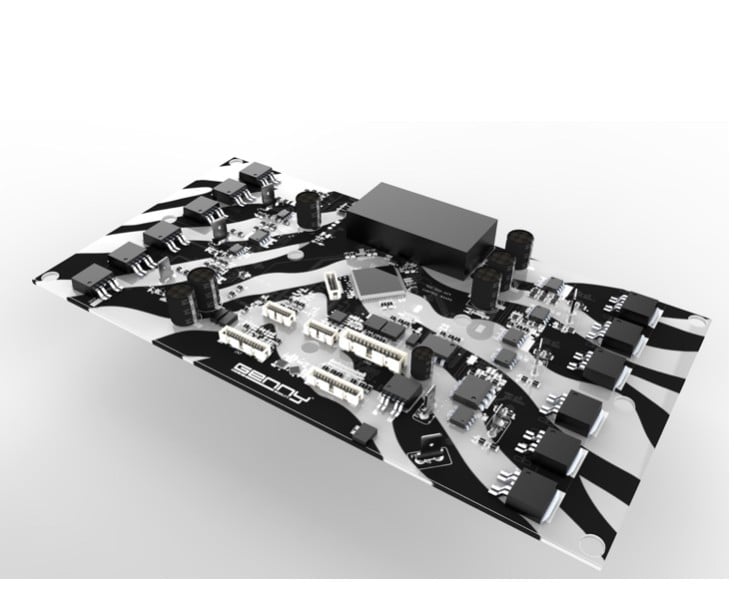
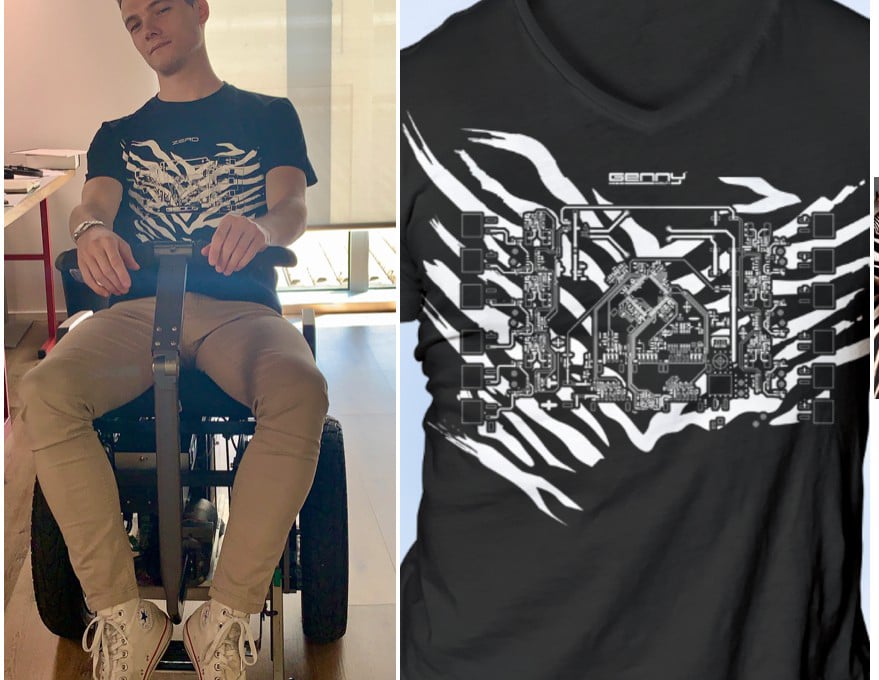
Its presence originates in the development of the electronic boards, before becoming a visible sign in communication and merchandising.
How the choice came about
When we finished prototyping the motherboards, the technician who made them phoned me to ask what colour I wanted them and what I wished to print on them. I did not even know it was possible to choose a different colour. I asked him to wait: I would talk about it with my team.
From that discussion the idea of the zebra was born. A technical possibility thus became the occasion to give a visual form to something in which we recognised ourselves.
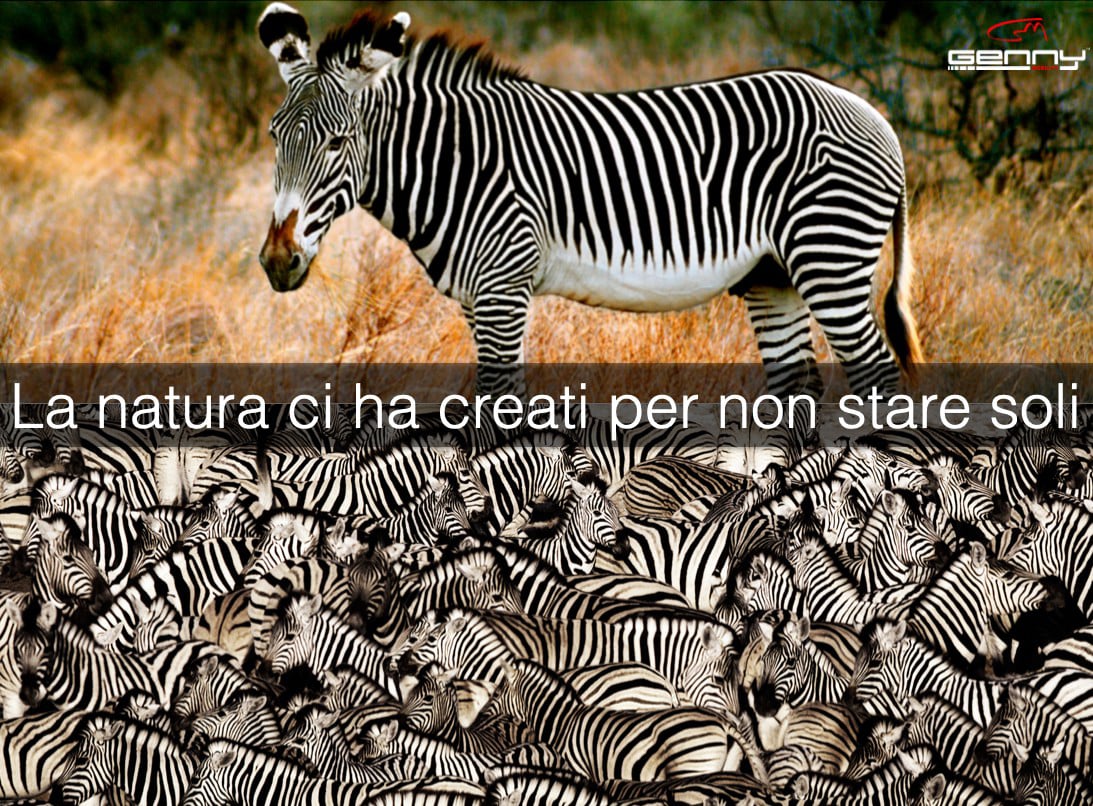
The zebra suggested a particular image to us: an animal whose black and white does not seem made to disappear into the colours of the landscape, but to blend with the stripes of the other zebras. We read that pattern as a camouflage given by nature for being together. In the scene that inspired us, the isolated zebra is more exposed; in the herd the stripes intertwine, the outlines blur and the predator struggles to distinguish the individual animal.
This is the image we chose to bring inside Genny. It is a symbolic reading of nature, through which we tell of the meaning we have attributed to the zebra.
The strength of being together
For us, that scene also recalls the experience of disability. On our own we can find ourselves more exposed to obstacles, to isolation and to the difficulty of making our voice heard. Being together, sharing experiences and supporting one another can create a strength that is harder to express individually.
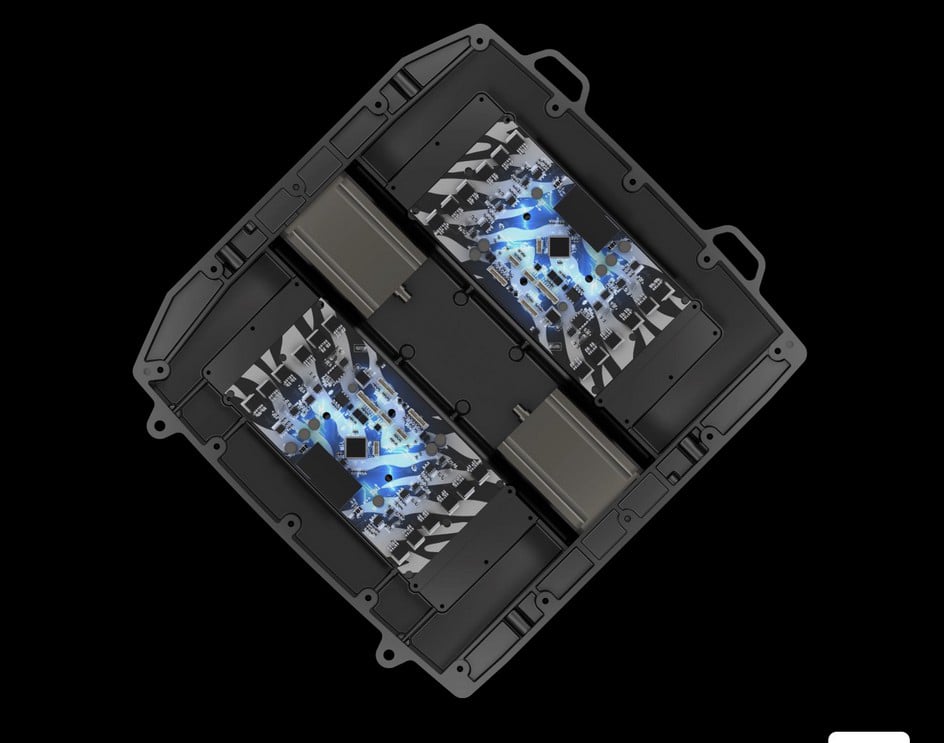
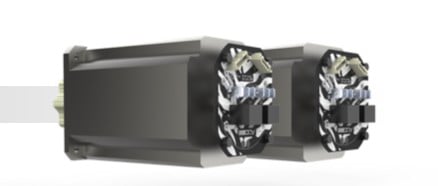
The zebra pattern entered the motherboards and the motors, then it was taken up in the merchandising. A meaning born within the technology, in components that are normally barely visible, has thus found a recognisable expression on the outside as well.
From confusion to integration
The confusion suggested by the stripes can, for us, also have a second meaning. In our vision of mobility, when people with and without disabilities use the same means of transport, the distinction between what is considered “disability” and what is considered “normality” becomes less sharp.
Personal differences remain, while the experience of movement can become shared. The means of transport can be a meeting point, something that people share. It is in this sense that we also connect the zebra to integration: being together in everyday life and being able to take part in the same experience.
The zebra thus expresses a bond between people. It reminds us why we started this work and what culture of mobility we want to help build.
The zebra pattern in technology and merchandising
The zebra pattern originates in Genny's electronic components: from the boards and the motors it was then taken up in the merchandising.
References to sources
The R codes refer to the sources of the historical passages and of the context. They do not turn the company's principles and commitments into verified scientific results.
R1 — GENNY-F0006. Teobaldo Semoli, «Paolo Badano, l'uomo che ha reinventato la sedia a rotelle», Panorama, 1 September 2012. Passages: introduction and questions on the birth of the project. The interview documents the founder's account, the need for autonomy and the early stages of Genny in the context of the 2012 models, prior to Genny Zero.
panorama.it
R2 — GENNY-F1503. Tiziano Luccarelli, Paolo Badano, Gracemarie Bricalli, Helge Tennø, Martina Mazzucchelli and Stefano Bigliocchi, «Multi-disciplinary and lean innovation for assistive technology», in the proceedings of the GReAT Consultation 2019, pp. 329–341. The contribution deals with the concept of APW (Active Powered Wheelchair): electric propulsion combined with the active control of the person through torso and weight. Publication in the WHO proceedings documents this research contribution, without attesting to an official recognition of the APW category by the WHO.
who.int
R3 — GENNY-F0204. ADI, «Genny Zero», ADI Design Index 2025, Design for the person category. Passages: description, credits and specifications. It credits Genny Factory, GMI and Enrico Pagano; it reports a share of Italian suppliers and product information referring to the 2025 datasheet. On its own it does not attest to the current supply chain or to a safety certification.
adi-design.org
R4 — GENNY-F0305. Fabrizio Michels and Paolo Badano, «Eine Tessiner Geschichte im Zeichen von Swiss Made», Innovation Kunststoff, June 2023 issue; online version of 3 July 2023. An industrial account of development and collaboration with Borflex; not an independent certification of origin.
R5 — GENNY-F0005. Cinzia Ficco, «Disabilità. Paolo Badano: vi presento Genny», Biomed CuE, 2 November 2015, reprint attributed to magazine.tipitosti.it. It confirms the choice of a feminine name and the fact that the precise reason was not revealed; the original attributed to Tipitosti has not been traced.
biomedicalcue.it
R6 — GENNY-F2008. Marco Silvio Jäggi, «L'abile disabile», Emozioni, September 2022, pages provided 25, 27, 29 and 31. The author reports that Paolo did not reveal the meaning of the name. Copies consulted in the archive; article not found online.
R7 — Company document. «GENNY DNA», master v1.10 of 18 November 2026, sections 6–8. Source of the company's formulation on the name and of the vision regarding the product's soul and the future AI voice. These are statements by the founder and the company; the text was approved by Paolo Badano on 18 November 2026.
R8 — GENNY-F2015. Paolo Badano, direct statement of 18 November 2026 during the review of the DNA. Primary source for the will to keep the reason for the name confidential. It does not reveal the private reason.
R9 — GENNY-F1009. Simone Fanti, «Paolo Badano: Genny, la sedia su due ruote che strizza l'occhio alla mobilità cittadina», Oggi, 28 October 2024. Badano states that he created the acronym in the medical framing of Genny. It is an account by the founder.
oggi.it
Z1 — Company document. «Perché le zebre in Genny», direct account and images provided by Paolo Badano on 19 November 2026, text reworked in the first person for the DNA section. Primary company source on the origin and meaning of the zebra symbol. The reference to camouflage describes the naturalistic image that inspired the choice of the symbol: it is a symbolic reading, not a scientific statement.